
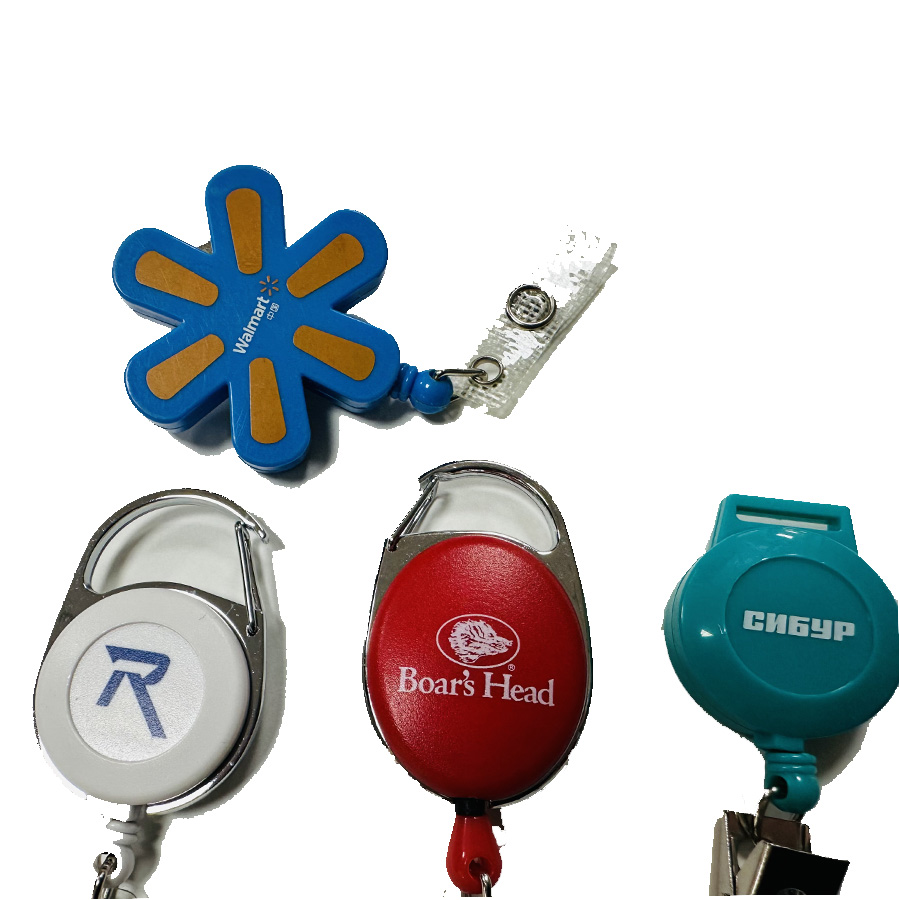
Plastic Badge Reel With Silkscreen Printing: A Comprehensive Guide
What is a Plastic Badge Reel with Silkscreen Printing?
A Plastic Badge Reel with Silkscreen Printing is a professional identification accessory designed to securely hold and display ID cards, badges, or access passes while allowing easy swiping or scanning. The reel consists of a retractable mechanism housed in a durable plastic casing, typically made from ABS (Acrylonitrile Butadiene Styrene) or polypropylene with a tensile strength of 40-50 MPa. The silkscreen printing process applies high-resolution graphics, logos, or text directly onto the plastic surface using specialized inks that achieve 1200 dpi resolution with excellent opacity (typically 95-98% coverage). The retractable cord is usually constructed from 0.5mm diameter stainless steel wire with a nylon coating, providing 100,000+ retraction cycles before potential wear.
Key technical specifications:
Material thickness: 1.5-2.0mm for impact resistance
Print durability: 5+ years without significant fading (under normal UV exposure)
Operating temperature range: -20°C to 60°C
Cord extension length: 60-90cm (standard models)
Characteristics and Technical Data
The plastic housing provides 94V-0 flame retardant rating (UL certification) while maintaining a lightweight profile of 15-25 grams. Silkscreen printing on these reels achieves color accuracy within ΔE ≤ 3 (CIE LAB color difference) and can reproduce Pantone colors with 90-95% accuracy. The printing process creates a surface roughness of Ra 0.8-1.2μm, ensuring both visual appeal and tactile quality. Advanced models may incorporate UV-cured inks that reach full cure in 0.5-2 seconds under 365nm wavelength UV light at 300-600 mJ/cm² energy.
The retraction mechanism utilizes a 0.3-0.5 N·m torque spring for smooth operation, with a retraction speed of 0.5-1.0 m/s. The clip assembly typically consists of 304 stainless steel with a Rockwell hardness of HRC 28-32, capable of withstanding 10,000+ attachment/detachment cycles.
Application Scenarios
Corporate Environments: In office settings with 500+ employees, customized badge reels improve security while displaying company logos (typically 25-50mm print width). They're particularly valuable in facilities requiring NFC/RFID card access, as the 3-5mm standoff distance created by the reel prevents signal interference.
Healthcare Facilities: Hospitals utilize antimicrobial versions with ASTM E2149-compliant additives that achieve 99.9% bacterial reduction against common pathogens. The smooth plastic surface (Ra ≤ 0.5μm) prevents microbial adhesion while allowing for daily disinfection with hospital-grade cleaners.
Event Management: Trade shows deploy reels with high-visibility colors (L* > 80) and 200-300 cd/m² luminance for easy attendee identification. The 5-7 day temporary use cycle demands cost-effective production runs of 5,000-10,000 units with rapid 24-48 hour turnaround silkscreen printing.
Education Institutions: Universities implement reels with double-sided printing (front: school logo, back: emergency info) using 150-200 mesh screens for detailed graphics. The breakaway feature (withstands 50-80N force) prevents choking hazards in laboratory environments.
Maintenance Procedures
Cleaning: Use isopropyl alcohol (70-90% concentration) applied with a lint-free microfiber cloth (GSM 200-300). Avoid abrasive cleaners exceeding Mohs hardness 3 to prevent surface scratching. For disinfecting, quaternary ammonium compounds at 400-600 ppm concentration are effective without damaging the print.
Storage: Maintain in environments with 30-50% relative humidity and temperatures below 40°C. Avoid direct sunlight exceeding 50,000 lux for prolonged periods to prevent UV degradation. When not in use, store reels in polyethylene bags (0.05-0.1mm thickness) with desiccant packets to maintain ≤0.5% moisture content.
Mechanical Care: Periodically check retraction force using a spring scale (0-5N range) - replace if tension drops below 0.2N. For metal components, apply silicone lubricant (ISO VG 10-20) every 6-12 months to maintain smooth operation. Inspect clip mechanisms for fatigue cracks using 10x magnification during routine maintenance.
Maintenance schedule recommendations:
Daily: Wipe with dry cloth
Weekly: Disinfect with approved cleaners
Monthly: Inspect mechanical components
Annually: Lubricate moving parts

Z-Sen Promotions Company is a 15 years lanyard factory and good at emergency order with high quality and competitive price also specialized in premium promotional gifts and corporate gifts Solution Company located in Dongguan, China.


Copyright © 2025 Dongguan Z-Sen Promotions Co.,Ltd All rights reserved.


 English

